Developer & APIs – Jul 15, 2026 – 5 min read
API Testing Tools in 2026: Free, Open-Source & Paid
API Testing Tools in 2026: Free, Open-Source & Paid
TL;DR: - API testing tools break into five distinct categories—functional, load, security, contract, and monitoring—and most teams need 2–3 tools, not one. - Postman (freemium) and Insomnia (free) dominate functional testing; k6 (open-source) and Gatling (open-source) lead load testing. - OWASP ZAP (free) and Burp Suite (paid) are the go-to pair for security; Pact (open-source) owns contract testing. - Price is a poor predictor of fit: a $0 tool with the wrong protocol support costs more in rework than a paid one that matches your stack. - Convertfleet's file-conversion API is tested daily with these same tools—structure, not brand loyalty, determines what survives production.
A solo developer validating a file-conversion API before wiring it into an n8n automation faces a different testing problem than a platform team guarding a public developer API against abuse. The first needs fast feedback in a terminal; the second needs to prove compliance to a security auditor.
This guide sorts the market into five testable categories, scores the leading tools in each, and gives you a decision framework you can apply in ten minutes. No affiliate links, no pay-to-play rankings—just what we've seen work and fail in production.
What are the five types of API testing tools?
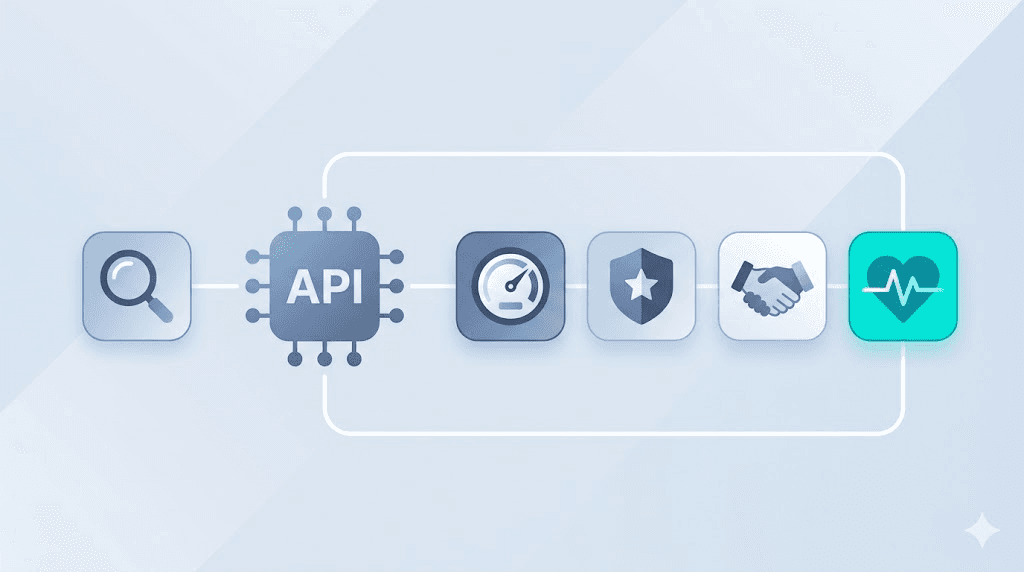
The five categories are functional, load, security, contract, and monitoring—each answering a different failure mode. Functional tools verify that requests return correct responses. Load tools find breaking points under traffic. Security tools hunt for injection flaws and broken auth. Contract tools enforce schema agreements between services. Monitoring tools catch drift in production.
Most production outages trace back to gaps in at least two categories. A team runs exhaustive functional tests in Postman, ships to production, then discovers their rate-limiting fails under real concurrency because they never ran k6. Or they validate 200 OK responses but miss that a partner's API changed a field type—something contract testing with Pact would have caught before deploy.
| Category | Primary Question | Typical Owner | When It Runs |
|---|---|---|---|
| Functional | "Does the API return what we expect?" | Backend / QA | Pre-commit, CI |
| Load | "Where does it break under pressure?" | Platform / SRE | Staging, pre-release |
| Security | "Can it be exploited?" | Security / DevOps | Continuous, before audit |
| Contract | "Do consumer and provider agree on the schema?" | Backend teams | CI, on schema change |
| Monitoring | "Is it healthy right now in production?" | SRE / Operations | Always |
Which functional API testing tool should you use?
Postman for teams, Insomnia for individuals, Bruno for the terminal-averse who need version control. Postman's collection runner and environment management make it the default for collaborative teams, but its 2023 shift to cloud-mandatory sync for teams pushed privacy-conscious users toward alternatives. Insomnia keeps local-first workflows free; Bruno stores collections as plain text files that git tracks cleanly.
For programmatic testing, REST Assured (Java) and SuperTest (Node.js) integrate directly into test suites. They're not "tools" in the GUI sense, but they run in CI without licensing friction and catch regressions that manual collection runs miss.
We migrated our own FFmpeg API validation from Postman to Bruno in 2024. The trigger: a teammate accidentally committed an API key in a shared Postman workspace. Bruno's plain-file format let us review secrets in pull requests, something Postman's opaque export format made painful.
| Tool | Cost | Protocols | Best For | Key Limitation |
|---|---|---|---|---|
| Postman | Freemium ($12–29/user/mo) | HTTP, gRPC, GraphQL, WebSocket | Team collaboration, documentation | Cloud sync required for teams; heavier than alternatives |
| Insomnia | Free (open-source core) | HTTP, GraphQL, gRPC, WebSocket | Solo devs, privacy-focused workflows | Fewer team features than Postman |
| Bruno | Free (open-source) | HTTP, GraphQL | Git-friendly collections, CLI runs | Smaller ecosystem, newer project |
| REST Assured | Free (Apache 2.0) | HTTP/REST | Java CI pipelines, complex assertions | Java-only; steeper learning curve |
| SuperTest | Free (MIT) | HTTP/REST | Node.js integration testing | Limited to Node ecosystem |
How do you choose a load testing API tool?
Start with k6 for developer-driven load tests, graduate to Gatling or JMeter for complex scenarios, and buy Neoload only when you need enterprise reporting. The choice hinges on who writes the test scripts and where they run.
k6 uses JavaScript, runs in CI via Docker, and outputs to Prometheus and Grafana out of the box. According to Grafana Labs' 2025 State of Observability report, k6 adoption among DevOps teams grew 47% year-over-year, making it the fastest-growing load tool in the survey. Its scripting model fits developers who already think in JavaScript.
Gatling uses Scala (or a Java DSL) and excels at modeling complex user flows with high concurrency. It's the tool we see most often in fintech and telecom where regulatory load testing is mandatory and reports need to impress auditors.
JMeter remains the safe default for teams already in the Apache ecosystem, though its GUI-based test construction feels dated compared to code-first alternatives. Neoload and LoadRunner fill enterprise procurement checklists but rarely outperform open-source alternatives on technical merit alone.
A worked load test pattern:
- Define your SLO. Ours: 95th percentile response time under 500ms for file conversion jobs under 100MB.
- Script the critical path in k6. Upload → convert → download for a representative file type.
- Run a baseline at 10% expected peak traffic. Record p50, p95, error rate.
- Ramp to 100%, then 150% peak. Note where error rate exceeds 0.1% or latency doubles.
- Profile the bottleneck. In our case, it was synchronous thumbnail generation blocking the response—fixed by making it async.
What are the best API security testing tools?
OWASP ZAP for automated scanning, Burp Suite Professional for manual penetration testing, and Semgrep or Snyk for code-level API security in CI. No single tool covers the full attack surface; effective teams layer automated scanning with targeted manual testing.
OWASP ZAP's active scanner finds common vulnerabilities—SQL injection, broken authentication, sensitive data exposure—without configuration. It's free, actively maintained by the Open Web Application Security Project, and integrates into CI via its headless mode. The 2023 OWASP Top 10 still lists "Broken Object Level Authorization" as the #1 API risk, and ZAP's authentication scripts can test for BOLA variants.
Burp Suite Professional ($449/user/year) justifies its cost when security teams need to craft custom attack payloads or test complex authentication flows. Its Repeater and Intruder tools are industry-standard for manual API penetration testing.
For earlier detection, Semgrep and Snyk scan source code for vulnerable patterns—hardcoded tokens, unsafe deserialization, weak JWT validation—before deployment. Snyk's 2024 State of Open Source Security report found that 48% of organizations now scan APIs in pre-commit hooks, up from 31% in 2022.
What is API documentation tooling and how does it relate to testing?
API documentation tools generate, validate, and serve machine-readable API specs—making them inseparable from testing workflows. A documented endpoint that isn't tested is a liability; a tested endpoint that isn't documented is unmaintainable.
OpenAPI (formerly Swagger) is the de facto standard. Tools like Swagger UI and Redoc render specs into interactive documentation, while Stoplight Spectral lints OpenAPI files for errors before they reach consumers. Spectral catches schema inconsistencies that would break contract tests downstream.
Postman and Insomnia blur the line: their collections double as documentation and test suites. Publish a collection, and you have both runnable tests and consumer-facing docs. Bruno takes a stricter separation—collections are for testing, documentation is generated elsewhere.
For API integration tools specifically, Apicurio and AsyncAPI handle event-driven and asynchronous APIs that OpenAPI struggles with. If your stack includes Kafka, WebSockets, or MQTT, these fill gaps that REST-centric testing tools ignore.
What is API contract testing and which tool leads?
Contract testing verifies that API consumers and providers agree on request/response schemas without requiring either to be deployed. Pact (open-source) is the dominant implementation, with ecosystem support for JavaScript, Java, Python, Go, and .NET.
The pattern works like this: the consumer defines expected interactions in a "pact" file. The provider is tested against that pact in CI. If the provider changes a field name or type, the pact test fails before the consumer ever deploys. This catches the "works on my machine" integration failures that mock-based unit testing misses.
Pact's 2024 annual review noted over 7 million pact files generated in CI pipelines, with the fastest growth in microservices architectures with 20+ interdependent APIs. We've adopted it for our API's internal service boundaries after a schema drift in our metadata service caused a 4-hour outage.
Alternatives like Spring Cloud Contract (Java-centric) and Schemathesis (property-based testing from OpenAPI specs) fill specific niches, but Pact's cross-language support makes it the safe default.
How do API monitoring tools differ from testing tools?
Testing proves correctness before release; monitoring detects failure after it. The tools overlap in what they measure—response time, status codes, payload structure—but differ in where they run and what they trigger.
Synthetic monitoring (Pingdom, UptimeRobot, Datadog Synthetics) runs scheduled probes from global locations and pages on failure. Real-user monitoring (Datadog RUM, New Relic) captures actual client experiences. Log-based monitoring (Grafana Loki, ELK) surfaces patterns humans miss.
For API-specific monitoring, Prometheus + Grafana with the blackbox_exporter remains the open-source standard. It can probe any HTTP endpoint, validate TLS certificates, and alert on SLO breaches. Datadog and New Relic bundle similar capabilities with higher setup speed and per-host pricing.
A critical distinction: monitoring tools without alerting are dashboards, not safety nets. The most common monitoring failure we see is a beautiful Grafana dashboard that nobody watches when the on-call engineer is asleep.
Common mistakes when selecting API testing tools
Teams over-invest in functional testing and under-invest in everything else. Postman collections with 500 requests feel productive but miss concurrency bugs, security flaws, and schema drift.
Mistake 1: Testing only the happy path. Every tool in this article can validate 200 OK responses. Fewer teams test error handling: what happens when a downstream service times out? When a file upload exceeds size limits? When rate limiting triggers? Google's 2024 Site Reliability Workbook notes that 70% of production incidents involve untested error paths.
Mistake 2: Ignoring test data management. Shared staging environments with hardcoded "test user #1" create flaky tests and race conditions. Tools like Mountebank (service virtualization) or dedicated test data factories solve this but require upfront investment.
Mistake 3: Running load tests too late. Load testing two days before launch discovers architectural limits that can't be fixed in two days. Shift load testing left to the design phase—model expected traffic, test prototypes, validate assumptions.
Mistake 4: Treating security as a final gate. OWASP ZAP scans at release candidate stage find issues that require re-architecture. Integrate security scanning into every pull request.
Mistake 5: Confusing monitoring for testing. A green Datadog dashboard doesn't mean your API is correct—it means it's running. Monitoring catches regressions; it doesn't prevent them. Teams that cut testing budget because "we monitor in production" ship bugs faster.
Can one tool do everything?
No—and attempts to force one tool across all five categories produce weak coverage everywhere. Postman's monitoring features are lightweight compared to Datadog. k6's security testing is nonexistent. Burp Suite doesn't load test.
The effective pattern we observe: one functional tool + one load tool + one monitoring tool, with security scanning integrated into CI and contract testing at service boundaries. For a typical mid-size team, that's Postman + k6 + Datadog, or Insomnia + Gatling + Prometheus/Grafana.
Budget-constrained teams can start strong with entirely free stacks: Bruno + k6 + OWASP ZAP + Pact + Prometheus. The open-source tools in this article are production-proven at Fortune 500 scale.
API Testing Tools Comparison Matrix
| Tool | Category | Cost | Best For | Key Limitation |
|---|---|---|---|---|
| Postman | Functional | Freemium | Team collaboration, docs | Cloud dependency for teams |
| Insomnia | Functional | Free | Solo devs, privacy | Fewer team features |
| Bruno | Functional | Free | Git-friendly, CLI | Smaller ecosystem |
| k6 | Load | Free (open-source) | Developer-driven load tests | Grafana Cloud for advanced analytics |
| Gatling | Load | Free (open-source) | Complex scenarios, audits | Scala learning curve |
| JMeter | Load | Free (Apache) | Apache ecosystem teams | GUI feels dated |
| OWASP ZAP | Security | Free | Automated vulnerability scans | False positives in default config |
| Burp Suite Pro | Security | $449/yr | Manual pen-testing, custom payloads | Cost, requires expertise |
| Pact | Contract | Free (open-source) | Microservices, CI integration | Setup overhead for simple APIs |
| Spectral | Documentation | Free | OpenAPI linting, standards enforcement | Requires OpenAPI spec to lint |
| Datadog Synthetics | Monitoring | $5/test/mo | Enterprise observability | Per-test pricing adds up |
| Prometheus + Grafana | Monitoring | Free (open-source) | Custom SLO tracking | Self-hosted infrastructure |
Frequently Asked Questions
What is the best free API testing tool in 2026? Bruno and Insomnia lead for functional testing; k6 for load testing; OWASP ZAP for security; and Pact for contract testing. All are actively maintained open-source projects with no paid tier required for core features.
Is Postman still free for API testing? Postman retains a free tier for individuals with limited collaboration features. Team features—including shared workspaces and advanced reporting—require a paid plan starting at $12 per user per month as of 2025.
What is the difference between API testing and API monitoring? API testing verifies correctness before deployment through scripted request/response validation. API monitoring detects failures in production by continuously probing endpoints and alerting on anomalies. Testing prevents bugs; monitoring detects them.
Do I need a separate tool for API security testing? Yes. General-purpose API testing tools lack the attack-pattern databases and vulnerability scanners that dedicated security tools provide. OWASP ZAP or Burp Suite should supplement—not replace—your functional testing.
How do I test APIs in CI/CD pipelines? Use CLI-first tools: Newman for Postman collections, k6 for load tests, OWASP ZAP in daemon mode for security scans, and Pact for contract verification. All return non-zero exit codes on failure, blocking broken builds automatically.
What are API integration tools and how do they differ from testing tools? API integration tools connect disparate systems—Zapier, n8n, MuleSoft, or custom middleware. They need testing too, but their failure modes are often about data mapping and authentication flow rather than endpoint correctness. Test them with the same functional tools, but validate full workflows, not single requests.
Conclusion
The right API testing tools depend on your team's size, your application's risk profile, and where you are in the development lifecycle. Start with the category you test least well today, not the tool with the most features. A functional tester with no load testing is more exposed than one with k6 and a basic collection.
At Convertfleet, we run file conversions through the same pipeline: Bruno collections in CI, k6 before any throughput change, and Prometheus alerting in production. The tools aren't secret; the discipline is. If you're building with n8n or directly against our FFmpeg API, the same testing rigor applies—structure your validation by category, automate it in CI, and never let monitoring replace testing.
Read next

Developer & APIs · Jul 15, 2026
File Conversion MCP Tool: Add It to Claude Code in 5 Min
Turn Convertfleet into a file conversion MCP server for Claude Code, Cursor, or any AI agent. Free tool-definition JSON included for automation workflow tools.

File Conversion · Jul 15, 2026
File Conversion API: 2025 Guide to Replacing 123apps at Scale
Hit limits with 123apps? Learn when free file conversion online tools stop scaling and how a file conversion API like Convert Fleet fixes batch, automation, and quality.

Automation & Workflows · Jul 15, 2026
How to Automate File Conversion in Pipedream: Audio, PDF & Video
Learn how to automate file conversion in Pipedream with a free API. Build workflows that convert audio, PDF, and video without managing ffmpeg or Lambda.